Family guides · Quebec & Ontario
Family guides: what to do when someone dies
If your loved one has just died, you are probably holding a lot at once. These free guides are written one institution at a time, for hospitals, residences and palliative care homes across Quebec and Ontario, and they start with what actually has to happen next.
Find yours
Guides by hospital and residence
3 guides
Quebec
Hospitals
Jewish General Hospital
Montreal · Côte-des-Neiges, Montreal
CIUSSS du Centre-Ouest-de-l'Île-de-Montréal
Open the guide
Lakeshore General Hospital
Pointe-Claire · West Island, Montreal
CIUSSS de l'Ouest-de-l'Île-de-Montréal
Open the guide
Royal Victoria Hospital
Montreal · Notre-Dame-de-Grâce, Montreal
McGill University Health Centre (MUHC)
Open the guide
Don't see the hospital or residence?
These are the institutions we have written guides for so far. We work with families across Quebec and Ontario, so call us wherever your loved one died and we will walk you through the next steps.
(438) 817-1770Start here
The first hours after a death
The hours right after a death are disorienting, and almost nothing has to be decided in them. This is the order things actually happen in, whether your loved one died in a hospital, a residence, or a palliative care home.
A doctor or nurse confirms the death
In Quebec a physician, a nurse or a coroner completes the attestation of death. In Ontario the attending doctor or a coroner completes the Medical Certificate of Death. This happens without you having to arrange it.
Your loved one stays in the institution’s care
The hospital or residence keeps your loved one until you have chosen a provider. You do not have to decide tonight, and you are not obliged to use whichever funeral home the staff mention first.
You choose who takes your loved one into their care
In both provinces this has to be a licensed business. In Quebec, only a funeral services business or a transporter under contract with one may transport your loved one. In Ontario, the business must be licensed by the Bereavement Authority of Ontario.
They file the paperwork with you
The declaration of death is completed with a family member and filed for you. Everything after that, the gathering, the ashes, the notifications, can happen on your own timeline.
Province by province
How the paperwork differs in Quebec and Ontario
| Step | Quebec | Ontario |
|---|---|---|
| Who confirms the death | A physician, a specialized nurse practitioner, a nurse or a coroner completes the attestation of death. Nurses were added on 7 June 2023. | The attending doctor or a coroner completes the Medical Certificate of Death. |
| What gets filed, and with whom | The declaration of death, completed jointly by a family member and the funeral director. The funeral services business files it with the Directeur de l’état civil. | The Statement of Death, completed by the funeral director and a family member, goes with the Medical Certificate of Death to the municipal clerk, who sends both to the Office of the Registrar General. |
| Who must be licensed | Only a funeral services business, or a transporter acting under contract with one, may transport your loved one. | Funeral establishments, transfer services, crematoria and cemeteries are licensed by the Bereavement Authority of Ontario under the Funeral, Burial and Cremation Services Act, 2002. |
| Before a cremation | The death has to be attested and declared before the funeral services business proceeds. | A coroner has to approve a cremation certificate first. The licensed provider applies for it, though a family can apply directly to the Office of the Chief Coroner. |
| The death benefit | The Québec Pension Plan pays a maximum of $2,500. In the first 60 days, priority goes to whoever paid the funeral expenses, on proof of payment. | The Canada Pension Plan pays a basic $2,500, plus a possible $2,500 top-up for deaths on or after 1 January 2025, to a maximum of $5,000. |
Do I have to use the funeral home the hospital suggests?
No. Being handed a name at the bedside is common, and it is a suggestion, not an instruction. The choice of provider is entirely yours, in both Quebec and Ontario, and you can make it after you have left the hospital. Nothing is lost by taking the night to think.
Is there any rush to decide?
Almost never. The hospital or residence can keep your loved one in its care while you decide. Some traditions do ask for burial within about 24 hours, and if yours is one of them the guide for your institution says so plainly. Otherwise, the gathering and the ceremony can wait weeks.
What is in a Cleo family guide?
Each guide is written for one institution. It walks you through what your family actually wants, then names the real funeral homes, cemeteries, green burial options and body donation programs near that building, with the official sources behind each one. It is free, and it points you elsewhere when elsewhere is right.
How Cleo works
- 1
Call us, any time
Reach a real, bilingual person 24/7. We arrange transport into our care, usually within about four hours.
- 2
We handle everything
We file the declaration of death and all paperwork, and carry out the cremation at a licensed crematorium.
- 3
Ashes returned home
We deliver your loved one's ashes to your home.
TRUSTED BY FAMILIES
What families say about Cleo
Not sure where to start? We'll walk you through it.
We understand this can be a difficult and confusing time. A real person will walk you through each step, tell you what you don't need, and put every cost in writing before anything proceeds.
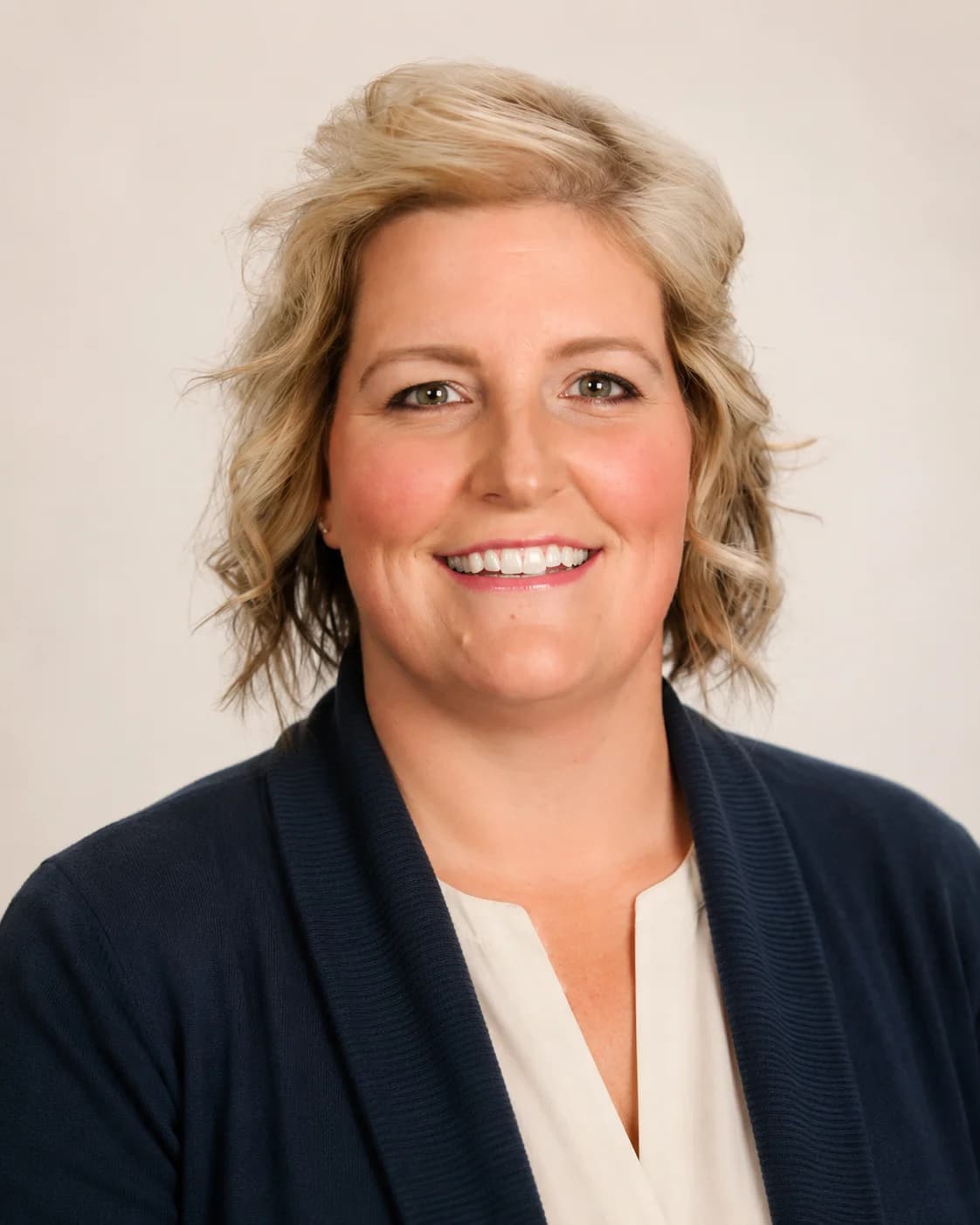
Megan Zavitz
Funeral Director